Our Roots and History
Knowing our diverse roots across the 120 Years we’ve been united.
The congregation of St. Paul’s formally organized as an independent congregation in 1907. Prior to 1907, the people of the congregation worshipped together in other churches including St. Peter’s Preston going back to the time of gathering the Lutheran peoples in the 1850s.
This year of 2026, the congregation is being reminded of it’s long legacy of God’s grace active in faith and service locally, synodically, nationally and around the world beginning with the service for Rally Sunday on September 13, 2026.
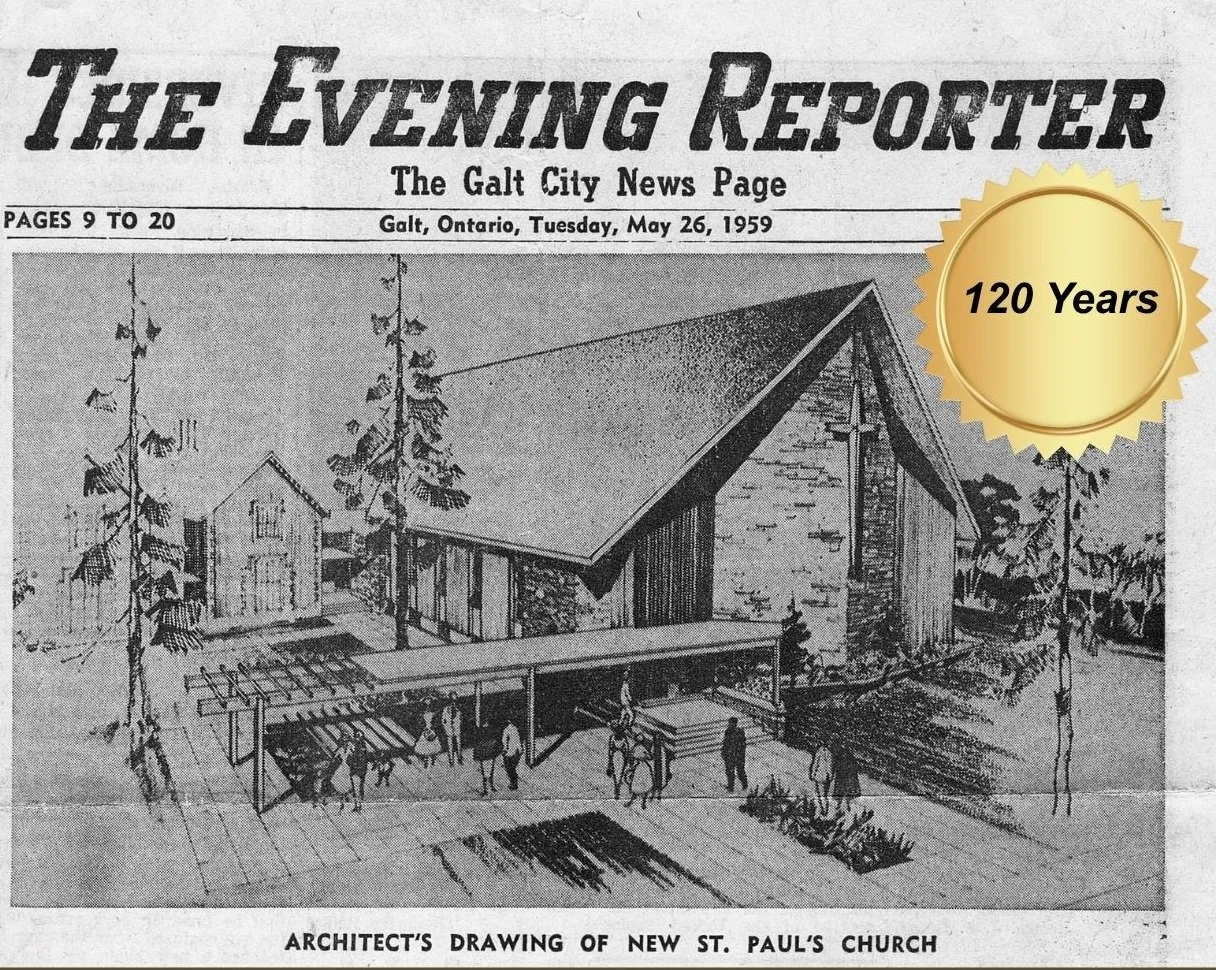
The people of St. Paul’s are rooted in our Lutheran heritage - the core of which is not a denominational identity - but an understanding of how God acts in loving-kindness in the world of which we are a part. The St. Paul’s congregation consists of some people whose tradition has always been Lutheran, and many others who come from Anglican, United, Presbyterian, Methodist, Baptist, Catholic and various other Christian backgrounds. St. Paul’s is also the home church to a number of mixed-faith families — and it is good to be community together because within God - diversity is a strength. St. Paul’s was once called the United Nations of area churches because within the congregation were people from many nations. Of these, a large number experienced WWII conditions. International displacements have brought numerous families to the booming economic hub of Cambridge referred to as the “Manchester of Canada,” Whatever one’s initial formation, St. Paul’s is a place where people can find thoughtful conversation partners, fun events and laughter to share in, great food and learning programs, and opportunities to serve in meaningful outreach ministries to neighbours near and far. The people of St. Paul’s and our pastor are open-hearted people who reach across the generations. We are people always looking to Widen the Welcome by God’s Amazing Grace.
The people of St. Paul’s are committed to Truth and Reconciliation. Since 2024, the people of St. Paul’s have been learning about and connecting with First Peoples of the Arctic (the Inuvialuit and the Gwitch’In), and of our local neighbourhood (the Haudenosaunee, Attawandaron and Anishinabeg peoples). In September 2026 the congregation is hosting Young Canadian Lutherans for a Service of Recognition for Murdered and Missing Indigenous Women and Girls and Two-Spirit Peoples. These persons are our neighbours, and they are six times more likely to experience violence, including homicide, in Canada. Beginning November 1, St. Paul’s church will be home to the first overnight shelter in Cambridge for women and gender-diverse persons while the community completes it’s dedicated YWCA facility. Our learning and relationship journey continues. One congregant is completing PhD studies inquiring into decolonizing and indigenizing post-secondary education in Canada in light of the 2015 Truth and Reconciliation Calls to Action 62 and 63 on Education and Reconciliation. Pr. Karen is a leader in the Haldimand Tract Ecumenical Partnership. For more see https://htepartnership.ca/
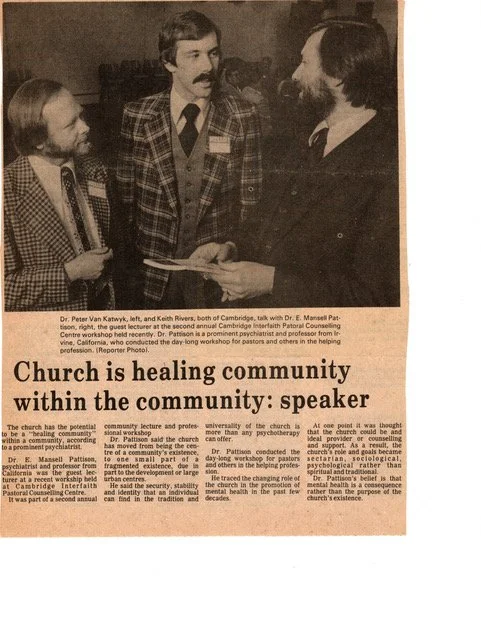
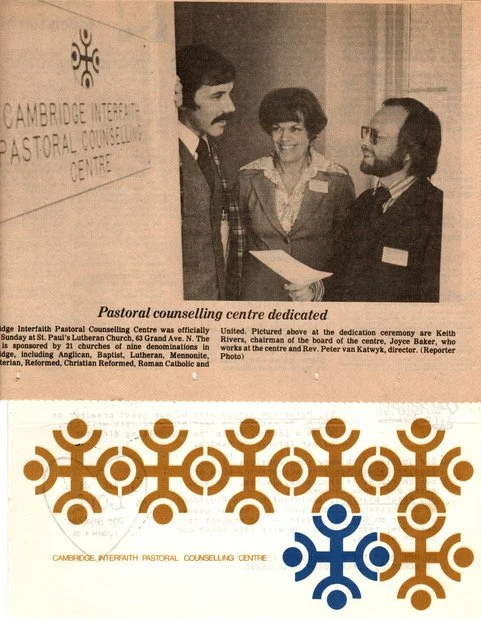
In this 120th year of the congregation of St. Paul’s, we are mindful that our church is built upon an original settler homestead and includes it’s still statuesque original home built in 1849 - Davidson House. The exterior of Davidson House is “Heritage” designated and is part of the downtown Cambridge walking tour. Within the walls of Davidson House, and our three story Sanctuary (2-level tech-equipped worship space) and Fellowship Hall (a complex of rooms for hosting meals, social events, community groups) we have shared our spaces and our social strengths with a counselling centre, daycare, Kinbridge, YWCA, Trinity Anglican Church, Anselma House, Camino, AA, Canadian Lutheran World Relief, and many neighbours and partners seeking to serve our community.
Our Organ
St. Paul’s Organ was built by Casavant Freres – who have been building organs of all sizes all around the world since 1879. St. Paul’s Organ, installed in 1974, and it was opus 3222. There were 50 organs built by them in 1974. The one immediately after St. Paul’s was installed at Queens University, and the one immediately before went to Pictou United Church in Pictou, NS. Overall there are 1320 pipes, divided into 3 sections. The largest pipes are 16 feet in length, the smallest, shorter than a pencil. An interesting fact is that the truck arrived to start the installation around the same time of the big flood in May of 1974. The design and specifications were primarily the work of Dr. Barrie Cabena, who was the advisor to St. Paul’s for the project, and our organist at the time was James Weber. Dr. Cabena gave the final approval after installation and played at the dedication recital. On the 50th Anniversary, David Hall is the congreation’s musician. David and James Weber both studied music under Barrie Cabena and in 1976, were in the first graduating class of the Faculty of Music at Wilfrid Laurier University (as opposed to the Department of Music at Waterloo Lutheran University). Further studies took David to Montreal (where he met his wife, Lilla), Westminster College, and the Yale Institute of Sacred Music. Since his return to the K-W area in 1997, David has held a position with the Blessed Sacrament Parish and its associate schools while also working at WLU and WLS in various capacities as musician and liturgy teacher and supporting the WLS Chapel Choir. David is also active in the Waterloo Wellington Centre of the Royal Canadian College of Organists.
Our Past

Image taken from the Norman Antler Collection, Wilfrid Laurier University Archives.
Davidson House
Davidson House was built in 1849 by noted stone mason John Dalgleish for John Davidson. This home is one of a kind in the city. Constructed in the Gothic Style it features carved stone chimneys, french windows, decorated cornices under the eaves and hooded lintels made of cut stone around the upper parts of the windows. Each room has a marble fireplace, but today two fireplaces exist.
John Davidson was one of the town's most prominent citizens in the mid -1800. During his lifetime Davidson served as Mayor anf reeve for the town of Galt as well as postmaster. He was President of the Gore Mutual Insurance Company, and Captain of the 9th Co., 1st Bn., Waterloo County, Militia.

Image taken from the Norman Antler Collection, Wilfrid Laurier University Archives.